
Getting a Garage Door Ready for Winter: The Short Answer
In Alford, winterizing a garage door mostly means undoing the damage hurricane season left behind and protecting moving parts from the humidity swings and occasional cold snaps that come with Panhandle winters. That means checking weatherstripping, lubricating hardware that's been exposed to salt air and moisture, testing the balance, and making sure springs and cables haven't started rusting after months of storms. None of this is complicated, but skipping it is how a small issue turns into a stuck door on a cold, wet morning.
Why Winter Here Isn't Like Winter Up North
You won't be dealing with snow load or ice dams, but Jackson County winters still stress a garage door in their own way. Nights can dip into the 30s and 40s while days warm back up, and that temperature swing causes metal panels and tracks to expand and contract. Combine that with the humidity that never really leaves North Florida, and you get the classic recipe for rust on hardware, swollen wood panels, and stiff rollers that were already weakened by a long, wet hurricane season. Afternoon downpours may ease up compared to summer, but moisture is still getting into gaps you might not notice until a door starts sticking or dragging.
1. Inspect Weatherstripping and Seals
The rubber seal along the bottom of the door and the strips along the sides are your first defense against wind-driven rain and cold drafts. After a season of storms, check for cracking, tearing, or sections pulled loose. A gap as small as a quarter-inch can let in enough moisture to warp a wood panel or rust the bottom of a steel one. Replacement seals are inexpensive and one of the few garage door fixes most homeowners can do themselves with basic tools.
2. Lubricate Everything That Moves
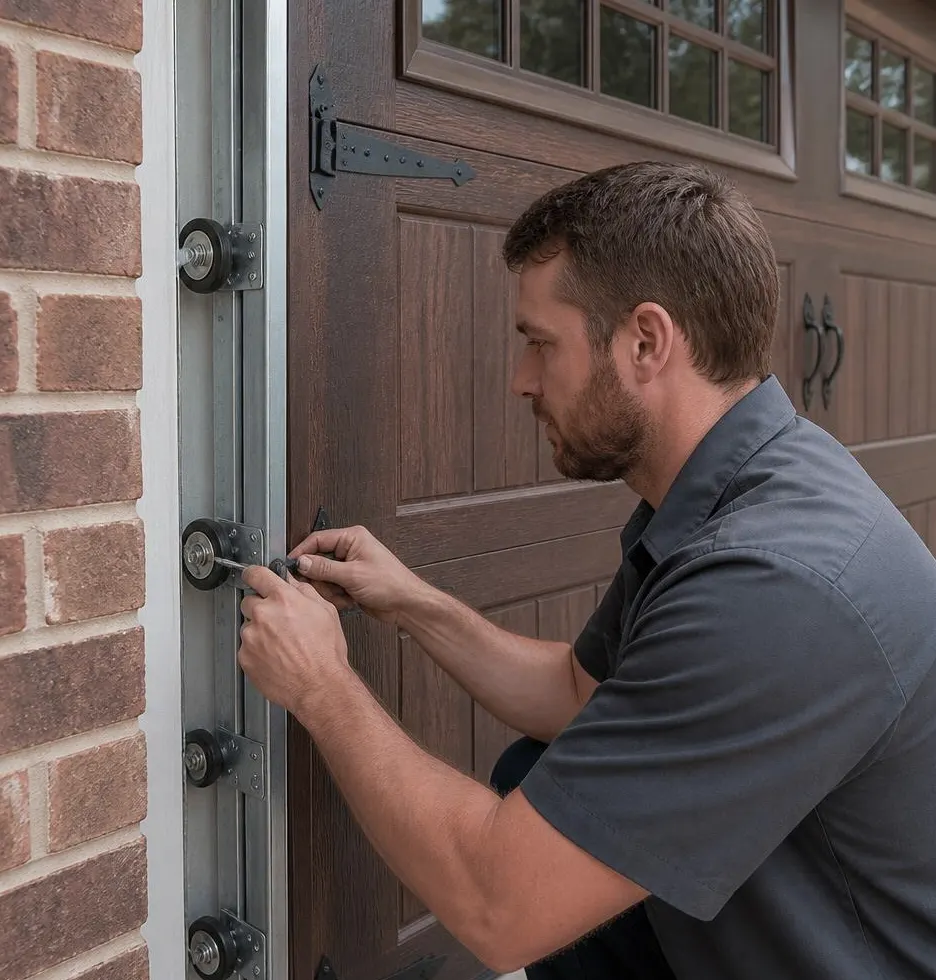
Hinges, rollers, springs, and the track itself should get a light coat of garage-door-specific lubricant (not WD-40, which attracts dust and grime). This matters more here than in drier climates — the combination of salt air near the coast and constant humidity speeds up corrosion on exposed metal. A five-minute lubrication job now can prevent the grinding, squealing, or jerky movement that shows up once temperatures drop and metal contracts.
3. Check Springs and Cables for Rust
Hurricane season is tough on springs and cables, especially if your door has been opened and closed repeatedly during storm prep or power outages. Look for surface rust, fraying cable strands, or springs that look stretched or uneven. These parts are under serious tension, so if you see visible damage, this isn't a DIY repair — it's exactly the kind of job that calls for professional garage door spring repair or cable repair before the part fails entirely.
4. Test the Balance
Disconnect the opener (pull the release cord) and lift the door manually halfway. If it stays in place, the springs are balanced correctly. If it falls or shoots upward, the spring tension is off — a problem that gets worse, not better, as temperatures swing through the winter months. An unbalanced door puts extra strain on the opener motor, which is the kind of slow damage that often shows up as a bigger repair bill come spring.
5. Look at the Opener and Safety Sensors
Wipe down the safety sensor eyes near the bottom of the track — pollen, dust, and storm debris collect on them more than people expect, and a dirty sensor can cause the door to reverse or refuse to close. While you're at it, listen for any new grinding or humming sounds from the opener itself, which often point to worn gears or a motor working harder than it should.
6. Think About Insulation If the Garage Connects to Living Space
If your garage shares a wall with the house, an insulated door (or weatherstripping upgrade) can keep cold, damp air from creeping into adjoining rooms during the cooler months. This isn't just a comfort issue — swings between a cold garage and a warm house can also stress the door's hardware over time.
When to Call Alford Garage Door Service
If you spot rust on the springs, a cable that's fraying, or a door that won't stay balanced when you test it, it's time to call in a professional rather than risk a spring letting go under tension. Our team handles garage door spring repair and garage door tune-up & maintenance for homeowners across Alford, Marianna, Cottondale, and the rest of Jackson County, and we'll catch the small issues — stiff rollers, worn seals, a sensor out of alignment — before they turn into a door that won't open on a cold morning.
Ready to get your garage door winter-ready? Call Alford Garage Door Service today for a tune-up in Alford, FL and the surrounding area.