
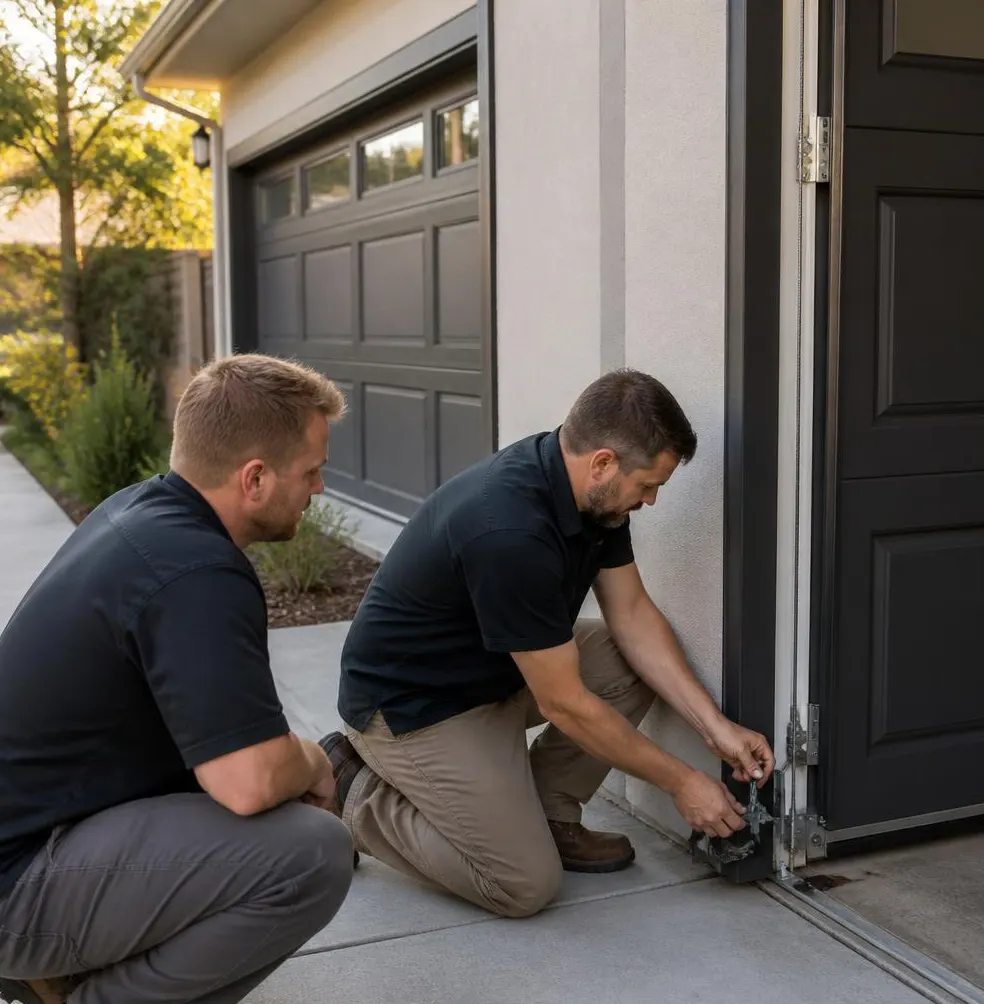
What a Technician Sees on a Pre-Storm Call
The call usually comes in a day or two before a storm is forecast. A homeowner notices the garage door is bowing slightly in the middle, or the center section of track has pulled away from the wall after a windy afternoon. Sometimes it's a spring that's been quietly rusting from months of humid air, and it finally lets go the moment extra load gets put on it. None of these are new problems — they've usually been building for a while. The storm just finds the weak spot first.
Why the Garage Door Is the Weakest Wall in the House
A garage door is the largest moving opening in most homes, and it isn't built like a solid wall — it's a series of panels held together by hinges, rollers, and tracks. When high wind pushes against a house, a door that isn't properly braced or wind-rated can flex, buckle, or blow in. Once that happens, wind pressure inside the garage pushes up against the roof structure from underneath, which is a major reason garage doors get singled out in storm damage. A door that looks fine on a calm day can still be the first thing to fail once gusts pick up, especially if the hardware behind it has been quietly weakening.
Getting the Door Ready Before the Next System Rolls Through
Hurricane season doesn't wait for a convenient week, so it's worth working through this list before the next storm watch is issued rather than during one:
- Check the tracks and rollers. Salt air and humidity cause surface rust that makes rollers bind or tracks pit over time. A door that's sticking or hesitating on a normal day will struggle far more under wind pressure.
- Look at the springs. Moisture speeds up corrosion, and a corroded spring is more likely to snap under the extra strain of wind gusts pushing the door around. If a spring looks flaky, discolored, or stretched unevenly compared to its pair, it needs attention before storm season advances further.
- Tighten loose hardware. Humidity swelling and constant afternoon downpours can work screws and brackets loose over a season. A quick pass with a wrench on hinges, track brackets, and the opener rail connection takes a few minutes and closes gaps that wind can exploit.
- Test the auto-reverse safety feature. This matters year-round, but it's also a quick way to confirm the opener's sensors and limits are working correctly before you're relying on the door in bad weather.
- Ask about a reinforcement or bracing kit. For doors that aren't already wind-rated, horizontal bracing across the panels adds real resistance to flexing without replacing the whole door.
- Clear drainage near the base of the door. Standing water from heavy afternoon rain can seep under the bottom seal and contribute to panel swelling, especially on older wood or composite doors.
Panels and Cables: What Fails First in This Climate
Humidity and salt air are hard on specific parts. Panels — especially older wood or composite ones — absorb moisture and swell, which throws off alignment in the track and puts uneven stress on rollers and hinges. Cables fray faster when they've been exposed to repeated damp-dry cycles, and a frayed cable under storm-level strain is far more likely to snap than one that's been inspected and kept in good condition. Catching swelling or fraying early, before a major storm puts extra load on the system, is far easier than dealing with a door that's come off track mid-storm.
After the Storm: What to Check Before Trusting the Door Again
Once the weather clears, walk the door through a full open-and-close cycle before assuming everything's fine. Look for a track that's pulled slightly from the wall, a panel with a new dent or bow, or a door that now runs louder or rougher than before. Debris pushed into the tracks during heavy wind is common and can cause a door to bind even if nothing is actually broken. If the door hesitates, reverses unexpectedly, or looks even slightly crooked going up, it's worth having it looked at rather than running it repeatedly and risking further damage.
When to Call Alford Garage Door Service
If a storm has knocked a door off track, warped a panel, or you've noticed a spring that looks worn before the next system arrives, that's the time to call. We handle off track door repair to get panels realigned and running smoothly, garage door spring repair for corroded or worn springs before they fail under load, and full tune-ups that catch the small issues — loose hardware, rust, fraying cables — before they become storm-day problems.
If your garage door needs a pre-storm check or repair after recent weather, call Alford Garage Door Service — proudly serving Alford, FL and the surrounding Jackson County area.